Why Overwatering Is the #1 Killer of Succulents
Succulents have tough, drought-tolerant reputations. Their greatest strength, surviving in harsh desert climates where little else can grow, is also their biggest weakness. Succulents are especially sensitive to overwatering, and without an understanding of how to avoid it, many new owners kill their plants by giving them too much love.
This guide dives into why watering can cause so many problems, helps you identify the signs of overwatering early, and provides a few simple tips to keep your succulents alive and thriving for years to come. At Plant & Sip, we see this issue all the time, and the good news is that it is preventable with a few practical habits.
The Physiology of Succulents and Water Retention
To understand why water can kill succulents when used incorrectly, we need to look at how they function physiologically. By definition, succulents are adapted to store water in their leaves, stems, or roots. This allows them to make it through long periods between waterings or rainfall.
Evolutionary Adaptation and Photosynthesis
Unlike most plant species, succulents use a special method of photosynthesis known as Crassulacean Acid Metabolism (CAM). While most plants keep their stomata open during the day to gather carbon dioxide, succulents keep them closed and open them at night instead. This process reduces water loss through evaporation.
Because of these adaptations, succulents use water much more slowly than other houseplants with lots of leaves. Giving them too much water at once provides more than they can use.
The Root System Vulnerability
Fast drainage is another key component of how succulents handle water. Succulent roots are adapted to absorb moisture quickly when it rains. But like all roots, they still need access to both air and water. Imagine how quickly water drains through sand or soil with little organic matter. Not only does the water move through quickly, but air can, too.
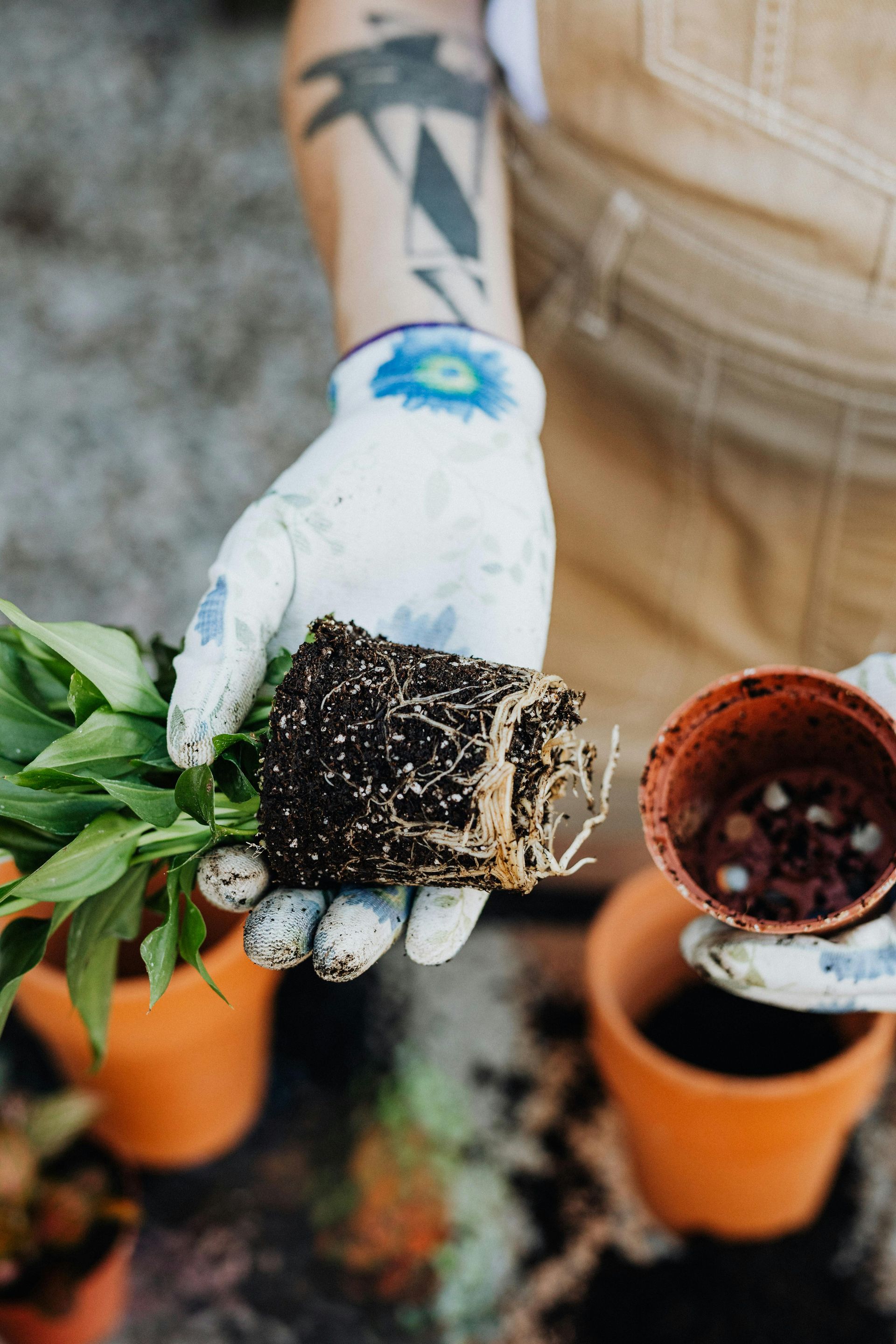
When you overwater your succulent in a pot, water pushes oxygen-filled air pockets out of the soil. Instead of air, the roots sit in water. Plant roots need oxygen to function and absorb water through root hairs. Without air, they suffer from hypoxia. When plants experience hypoxia from overwatering, it can lead to root death and can spread quickly.
The Progression of Damage
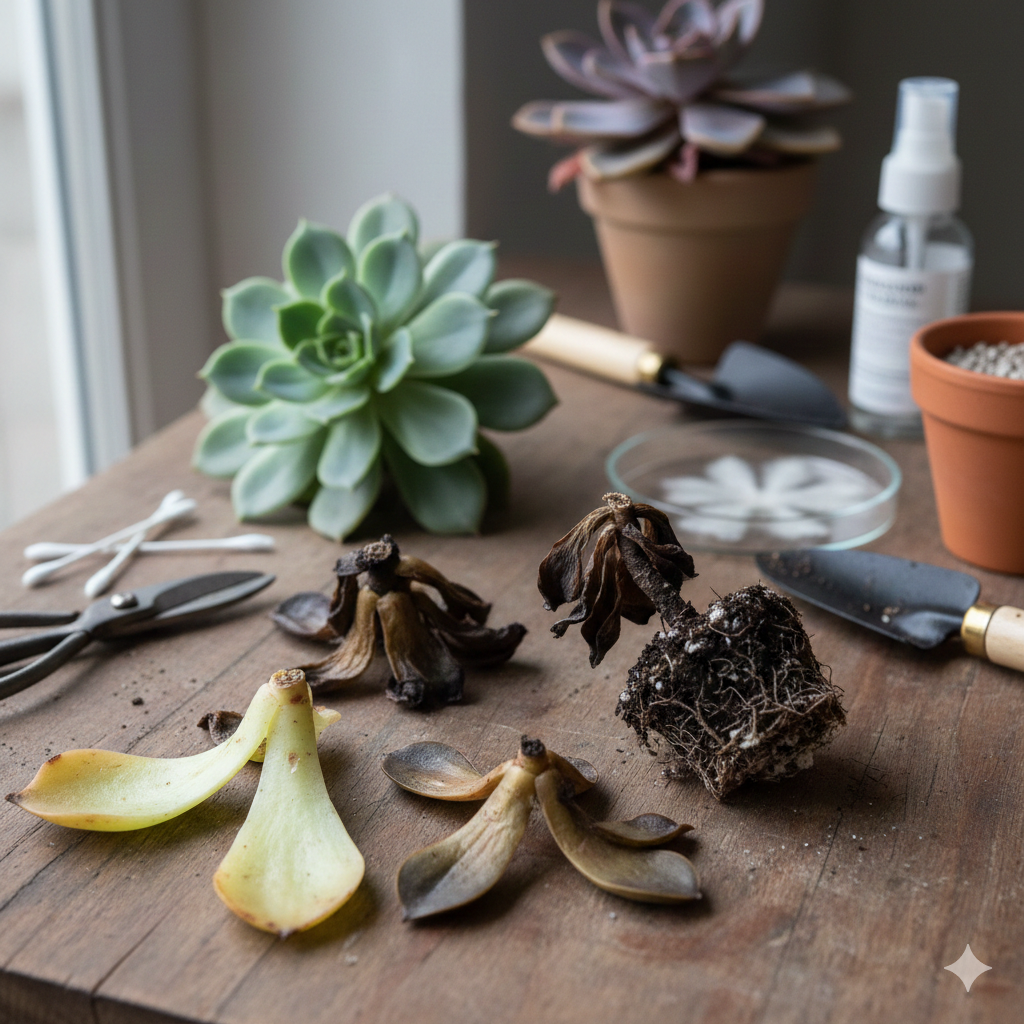
Once roots begin to die from oxygen deprivation, they become vulnerable to disease and fungi. Species like Pythium and Phytophthora can quickly make a home in a compromised plant, causing root rot that spreads up through the succulent’s body. You may not notice any problems until the stem becomes mushy and begins to rot as well.
Diagnosing Overwatering Symptoms
There are several telltale signs of overwatering to look for if you think your plant has been given too much water recently. If you catch an overwatered succulent early enough, you can probably save it. The tricky part is that many people mistake overwatered succulents for underwatered succulents. The symptoms can look similar, but if you assume more water will solve the problem, you only make it worse.
Visual Indicators
One of the first signs of overwatering appears in the leaves. Healthy succulent leaves should feel firm and look vibrant. If your succulent has been overwatered, the leaves may appear translucent, yellow, or an overall washed-out color. This is often due to edema, which occurs when cells take on too much water, swell, and rupture.
Another easy way to tell if you have overwatered your succulent is to feel the leaves. Healthy leaves should feel firm, while overwatered leaves will feel soft and mushy. They may even fall off the plant if you touch them gently. This happens because your succulent is trying to shed affected leaves and focus energy on keeping healthier tissue alive.
Contrast with Underwatering
While underwatering causes succulent leaves to shrivel and deflate (think raisins), overwatering presents a different problem. Too much water causes leaves to swell, but they also turn yellow or translucent and feel soft. Instead of raisins, think water balloons.
Advanced Stages
Once the roots start to rot, you may notice the stem near the soil turning brown or black and feeling soft or slightly squishy. You may also notice a musty smell coming from the soil when you water. That odor can indicate advanced decomposition caused by bacteria or fungi. At that point, the roots are often severely damaged, and the plant may only be salvageable if you cut healthy portions to propagate.
Preventative Measures and Best Practices
The best way to avoid overwatering is to take preventive steps before the problem begins.
Soil Composition
The single most important thing you can do to help prevent overwatering is to use the correct soil mix. Most indoor potting soils are too dense to provide adequate drainage for succulents. While this might be fine for other houseplants, it can kill succulents.
When you pick up a bag of succulent soil, you should see large chunks of pumice, perlite, or coarse sand. This type of soil holds your plant in place while allowing water to drain quickly. It also helps air return to the root zone faster after watering. If you need help choosing a mix, we can walk you through options at Plant & Sip based on your specific succulent varieties and home conditions.
Container Selection
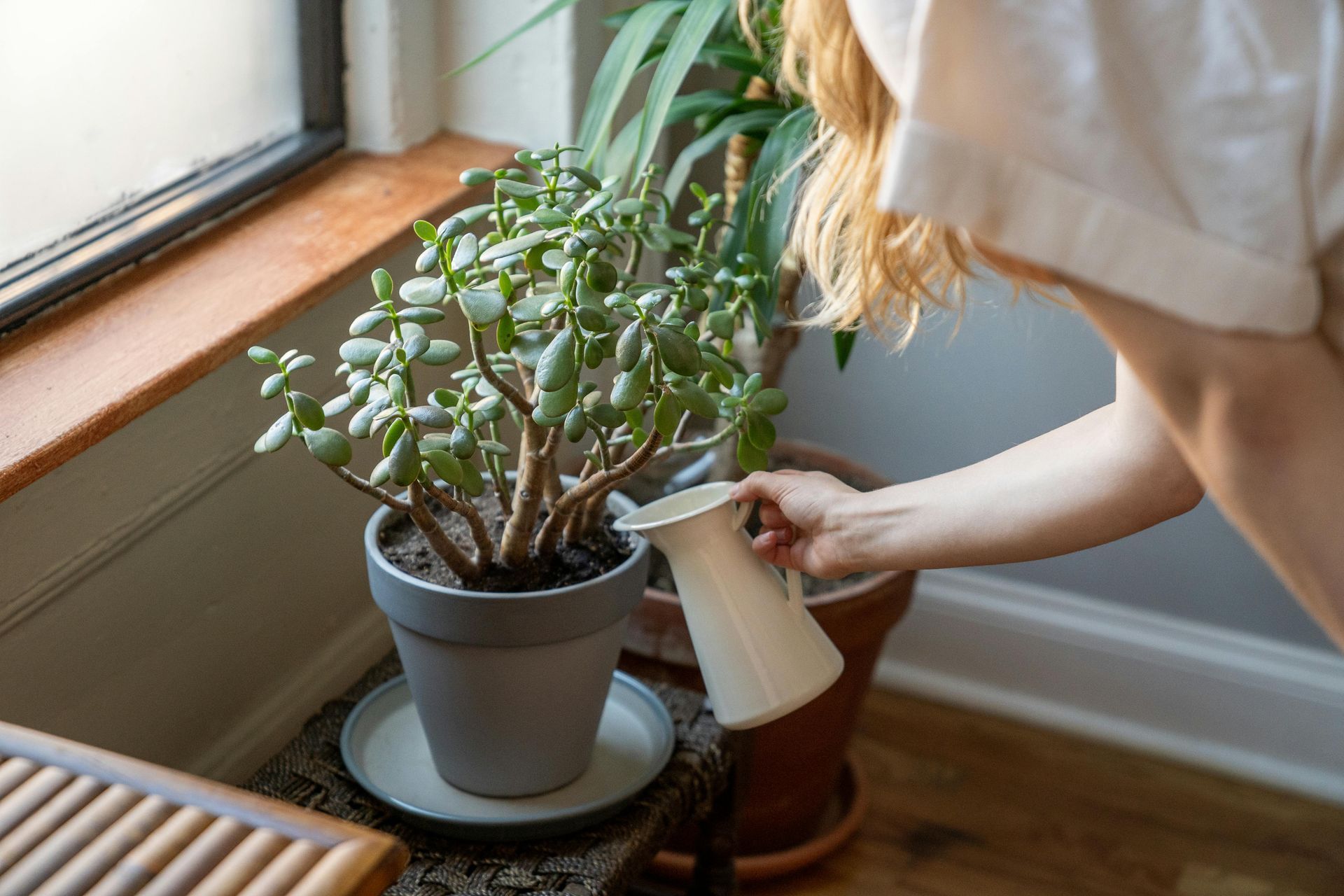
You will also want to make sure you are using the proper container. All pots used for succulents should have a drainage hole at the bottom. Without a hole, excess water has nowhere to go and will pool at the base of the pot, slowly rotting the roots.
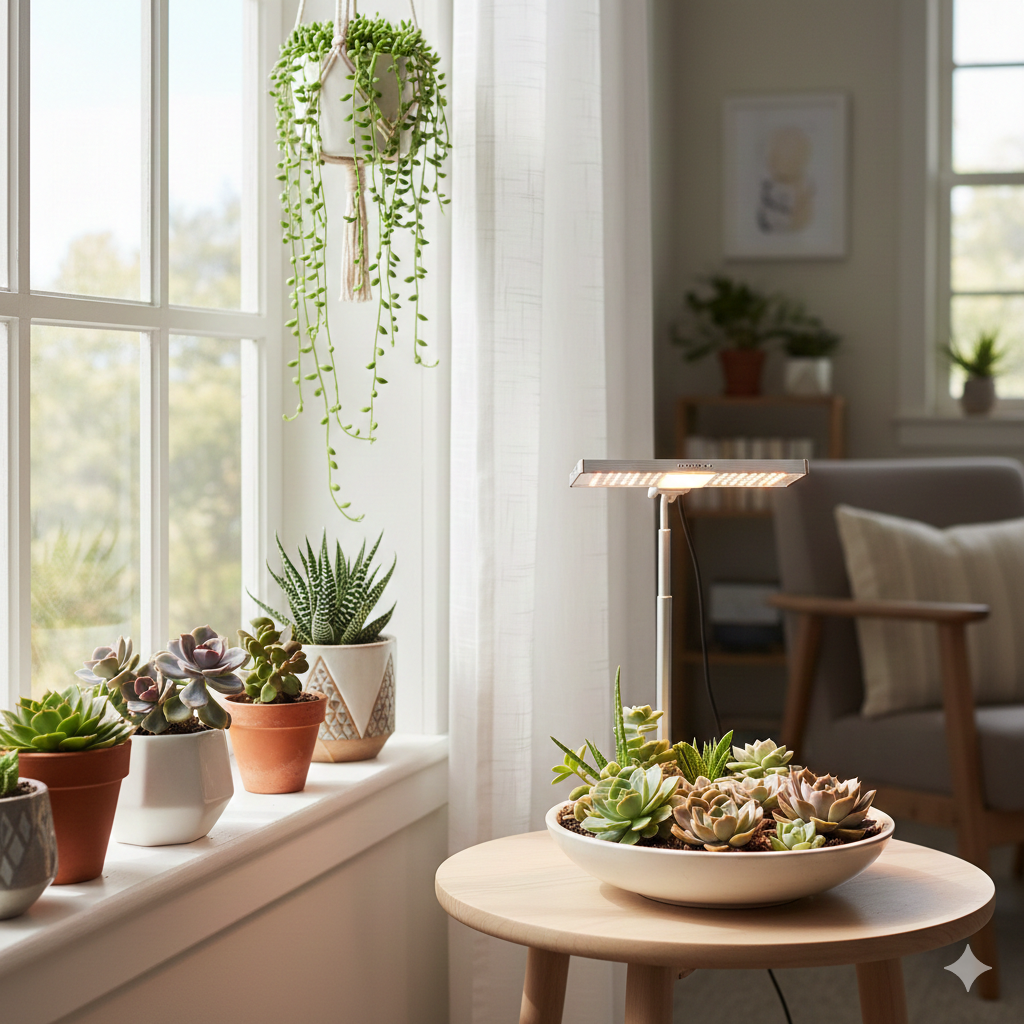
Terracotta pots are ideal for this reason. They allow moisture to escape through the material, and their porous structure helps wick water away from the root zone. Ceramic or plastic pots retain moisture longer, so you will need to be more conservative with watering.
Watering Techniques
You have the right soil, and you have your succulent in a terracotta pot with a drainage hole. Now it is time to water correctly. If you are new to watering succulents, it can seem confusing at first. Once you get the hang of it, you will understand why these plants thrive on a lighter touch.
Water thoroughly, but not too frequently. A popular method is called “soak and dry,” which means allowing the soil to dry out completely between waterings. Sounds easy enough, right? Here is the catch: there is no single watering schedule that applies to everyone.
Depending on the season, your succulents may need water weekly or every few weeks. It depends on how quickly your soil dries out. Factors such as light exposure, airflow, pot size, and temperature all influence drying time. Always confirm that the soil is dry all the way through before watering. Stick your finger into the soil up to your knuckle or use a wooden skewer. Only water if it comes out dry.
When you overwater a succulent, you disrupt its natural processes and create conditions that promote root rot and decay. Succulents evolved for harsh environments and are built to use water efficiently. The less frequently they are watered, the longer they can go without additional moisture.
It helps to shift your mindset away from schedules. Instead of watering on a routine, check your plants regularly and water only when they actually need it.
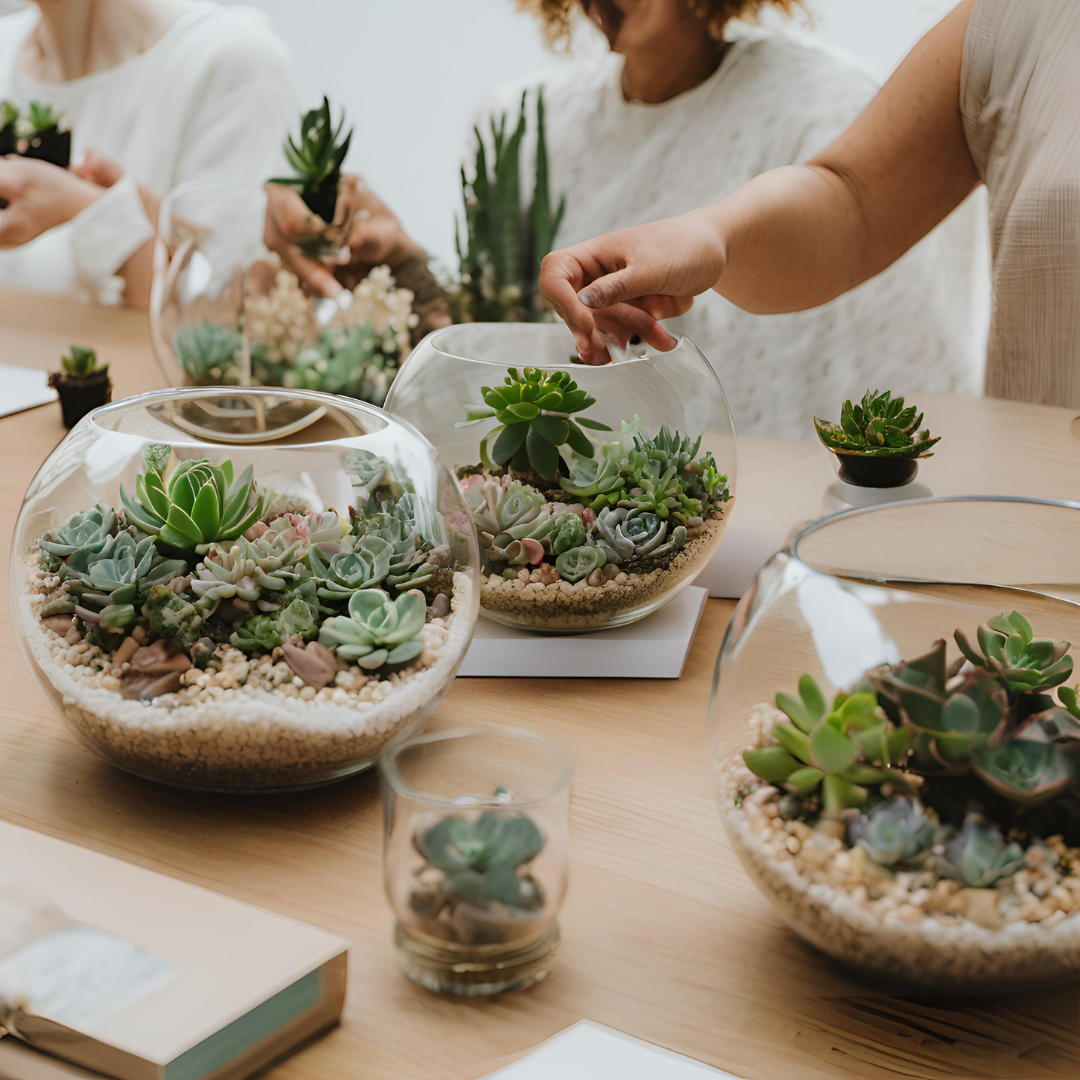
Use a fast-draining soil mix, choose pots with drainage holes, and let the soil dry fully between waterings. If you want hands-on guidance, join one of Plant & Sip's workshops. We cover soil selection, pot choices, and demonstrate practical watering techniques so you can build confidence and set your plants up for long-term success.
Plant & Sip Latest News